


Omloop Het Nieuwsblad marks the true beginning of the European road cycling season. More than a simple early-spring classic, it represents a cultural ritual for the sport: the moment when winter training gives way to cobbles, crosswinds and the first real tests of form. Held in Belgium, with start in Ghent and a twisting, punishing route through the Flemish Ardennes before finishing in Ninove, Omloop is where the tone for the Classics campaign is set.
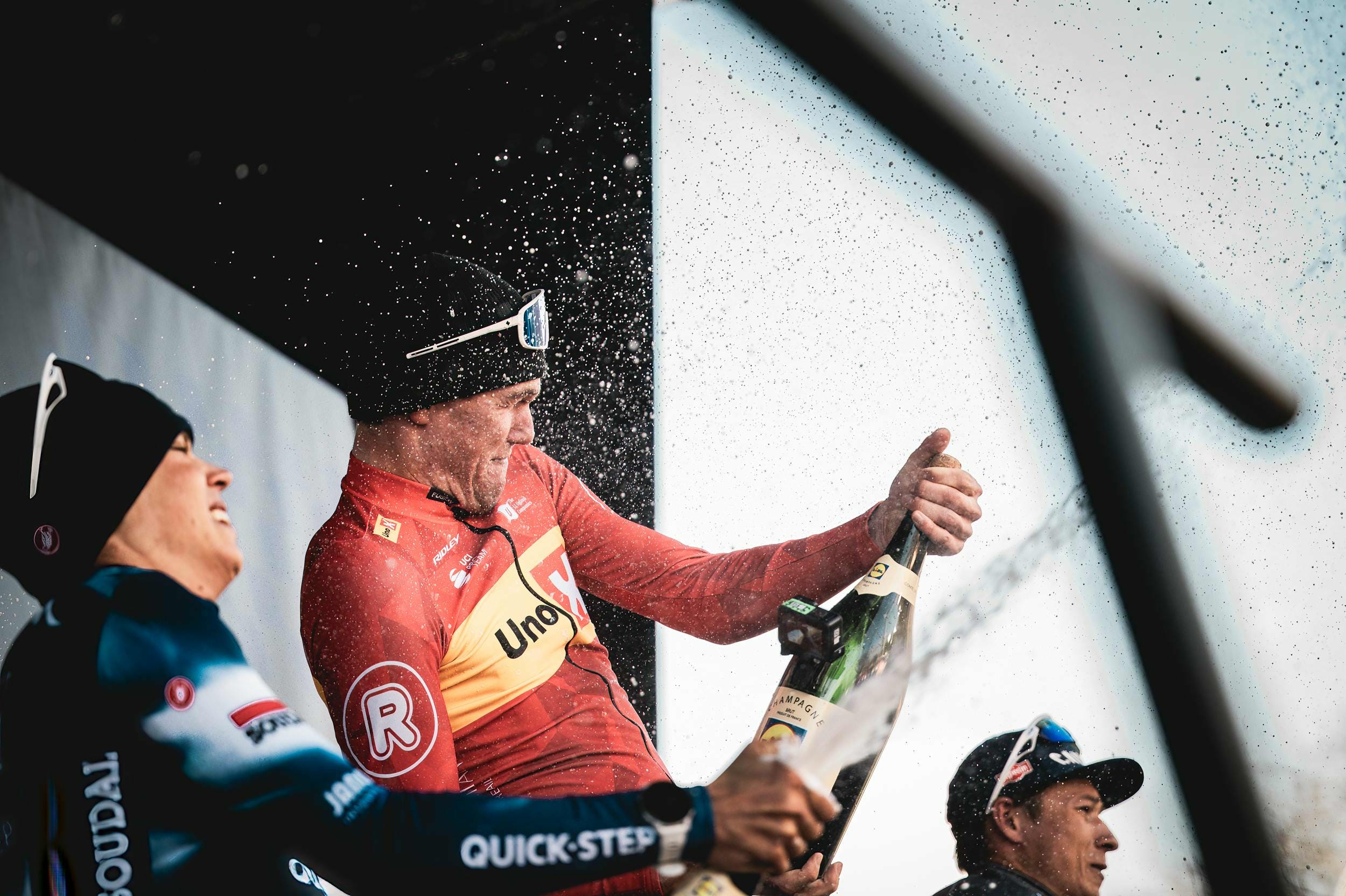
First raced in 1945, in the immediate aftermath of World War II, the event was originally known as Omloop van Vlaanderen before taking the name of the Belgian newspaper Het Nieuwsblad. Over the decades it has grown into the symbolic opening weekend of the cobbled Classics, followed the next day by Kuurne–Brussels–Kuurne. Together, they form a double-header that captures the essence of northern European racing: narrow roads, steep bergs, unpredictable weather and an atmosphere that blends passion with deep cycling knowledge.
What makes Omloop so important is not only its history, but its function within the season. For the specialists of the cobbled Classics, this is the first direct confrontation after months of preparation. Teams reveal their tactical hierarchies, new equipment is tested under race stress, and early psychological advantages can be gained. The race often features iconic climbs such as the Muur van Geraardsbergen and the Bosberg, climbs that demand explosive power and precise positioning. Winning in Ninove does not guarantee success later in races like the Tour of Flanders or Paris–Roubaix, but it sends a clear signal.
The 2026 edition carries additional weight thanks to the highly anticipated season debut of Mathieu van der Poel and Wout van Aert. Whenever these two line up together, the narrative extends beyond the race itself. Their rivalry, rooted in cyclocross and carried into road racing, has defined a generation of Classics. Van der Poel, with his instinctive aggression and technical brilliance, and Van Aert, with his versatility and remarkable engine, embody two different interpretations of modern cycling dominance.
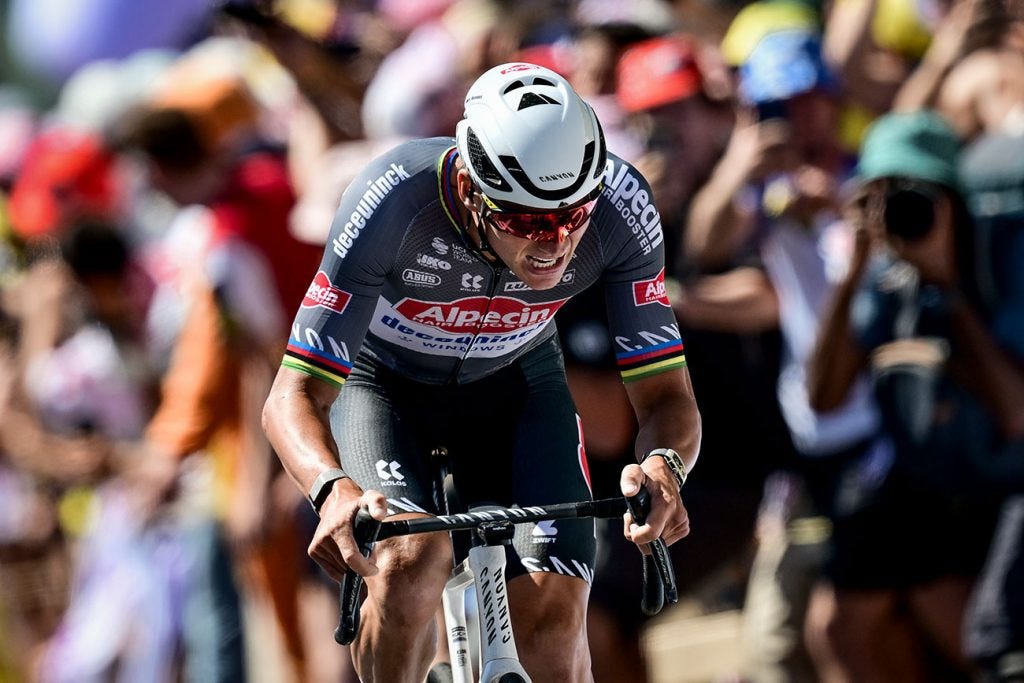
Their presence transforms Omloop from a tactical battle into a global spectacle. Both riders have used early-season races in the past as launchpads for major campaigns, and fans and analysts alike scrutinize every acceleration, every positioning choice, every sign of condition. A strong performance in Omloop can frame expectations for the monuments to come. A defeat, especially if decisive, can shape the psychological landscape heading into March and April.
Beyond individual stars, Omloop Het Nieuwsblad highlights the strategic depth of contemporary road cycling. The race is rarely controlled in a straightforward manner. Crosswinds can split the peloton far from the decisive climbs. Breakaways often form on seemingly innocuous sections. Teams with multiple leaders can play tactical games, forcing rivals to chase and exposing weaknesses. In recent years, the balance between explosive solo moves and reduced group sprints has kept the outcome uncertain until the final kilometers.
For Belgian fans, Omloop is more than a sporting event. It is a seasonal marker, a communal gathering along cold roadsides where cycling is not entertainment but heritage. The crowds, wrapped in scarves and rain jackets, understand the subtleties of positioning before the Molenberg or the importance of entering the Muur in the first ten wheels. The atmosphere is intimate yet intense, a reminder that the Classics remain deeply rooted in local culture even as the sport globalizes.
In a calendar increasingly shaped by stage races and international expansion, Omloop Het Nieuwsblad retains its distinctive identity. It demands resilience rather than rhythm, instinct rather than calculation. For riders like Van der Poel and Van Aert, it offers the first real measure of ambition. For teams, it provides an early verdict on winter preparation. For fans, it is the signal that cycling’s most evocative season has begun.
As the peloton rolls out of Ghent and heads toward the cobbles and bergs of Flanders, the message is clear. Spring has arrived, and with it the raw, uncompromising beauty of the northern Classics.
UCI WorldTeams: Alpecin–Premier Tech, Decathlon CMA CGM, EF Education–EasyPost, Groupama–FDJ United, Ineos Grenadiers, Lidl–Trek, Lotto–Intermarché, Movistar Team, NSN Cycling Team, Red Bull–Bora–Hansgrohe, Soudal–Quick-Step, Team Bahrain Victorious, Team Jayco–AlUla, Team Picnic–PostNL, Visma–Lease a Bike, UAE Team Emirates XRG, Uno-X Mobility, XDS Astana Team.
UCI ProSeries Teams: Burgos Burpellet BH, Cofidis, Pinarello–Q36.5 Pro Cycling Team, Team TotalEnergies, Tudor Pro Cycling Team, Unibet Rose Rockets, Team Flanders–Baloise.
website: https://www.omloophetnieuwsblad.be/en